

Before Humans Ruled the Earth… There Were Others Like Us!

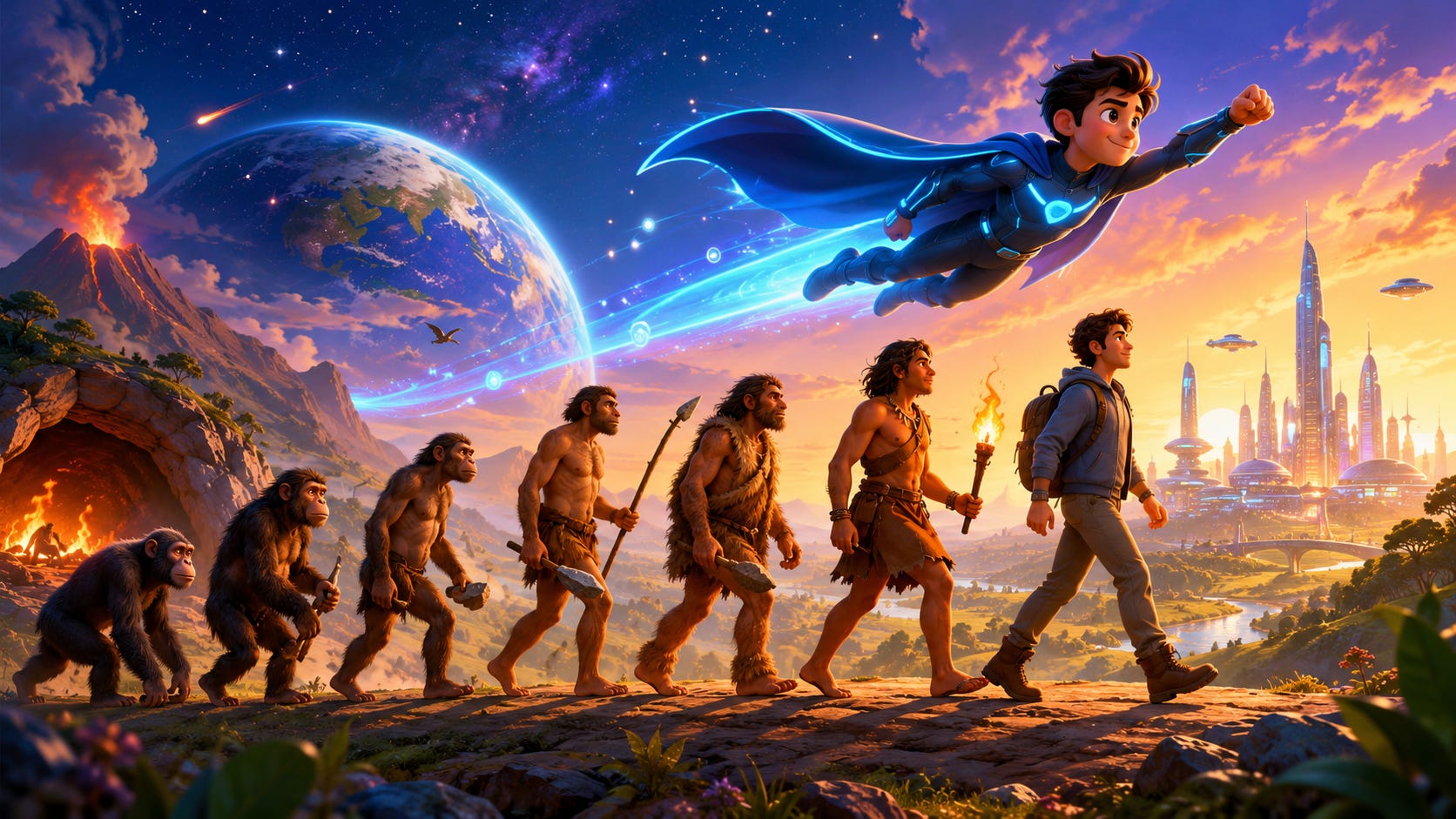
Hello Thinkers, 👋
Today, let’s travel far back in time — long before cities, schools, books, roads, or even farming.
Here is something fascinating: we are not the first kind of humans to walk on Earth.
Today, only one human species is alive — Homo sapiens, that means us. But thousands of years ago, Earth had many types of humans. Some were stronger than us. Some were great travellers. Some survived in icy lands. Some lived in high mountains where breathing was difficult.
So what happened to them? Why are we the only ones left?
Let’s explore this amazing human story. 🌍✨
🧊 Neanderthals: The Strong Ice Age Humans
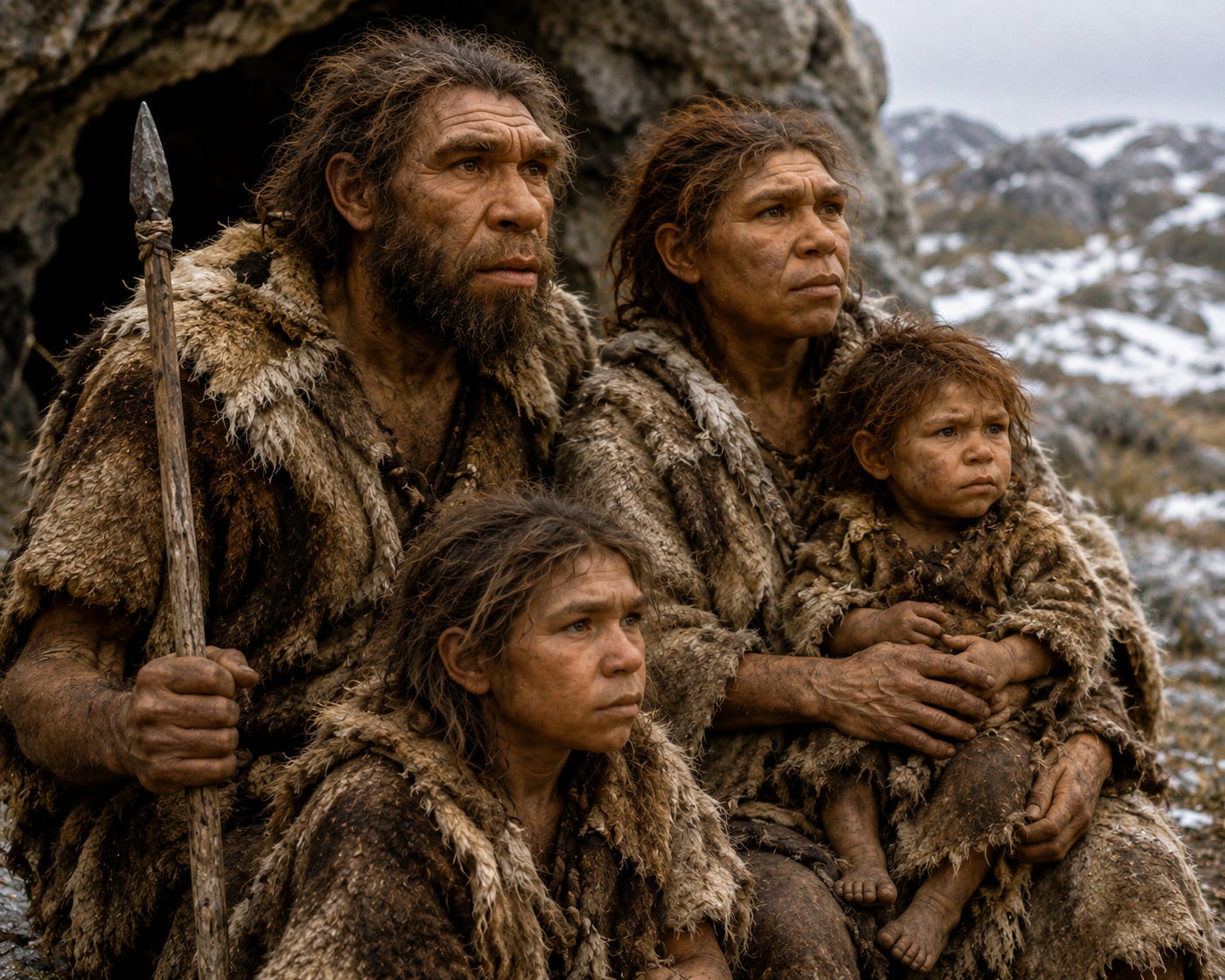
Neanderthals were one of our closest ancient relatives. They lived mainly in Europe and parts of Asia.
They were short, strong, muscular, and perfectly built for cold weather. Their bodies helped them survive during the Ice Age. They were not foolish cave people, as old stories sometimes show. In fact, they were intelligent.
They made tools, used fire, hunted animals, lived in groups, and cared for each other.
❓Why did Neanderthals disappear?
Neanderthals probably became extinct because of many reasons together. Their population became small. Climate kept changing. Food may have become harder to find. They also had to compete with Homo sapiens, who were spreading into their areas.
But Neanderthals did not vanish completely. Many people alive today still carry a small amount of Neanderthal DNA.
That means a tiny part of them still lives inside modern humans. 🧬
🔥 Homo erectus: The Fire Makers
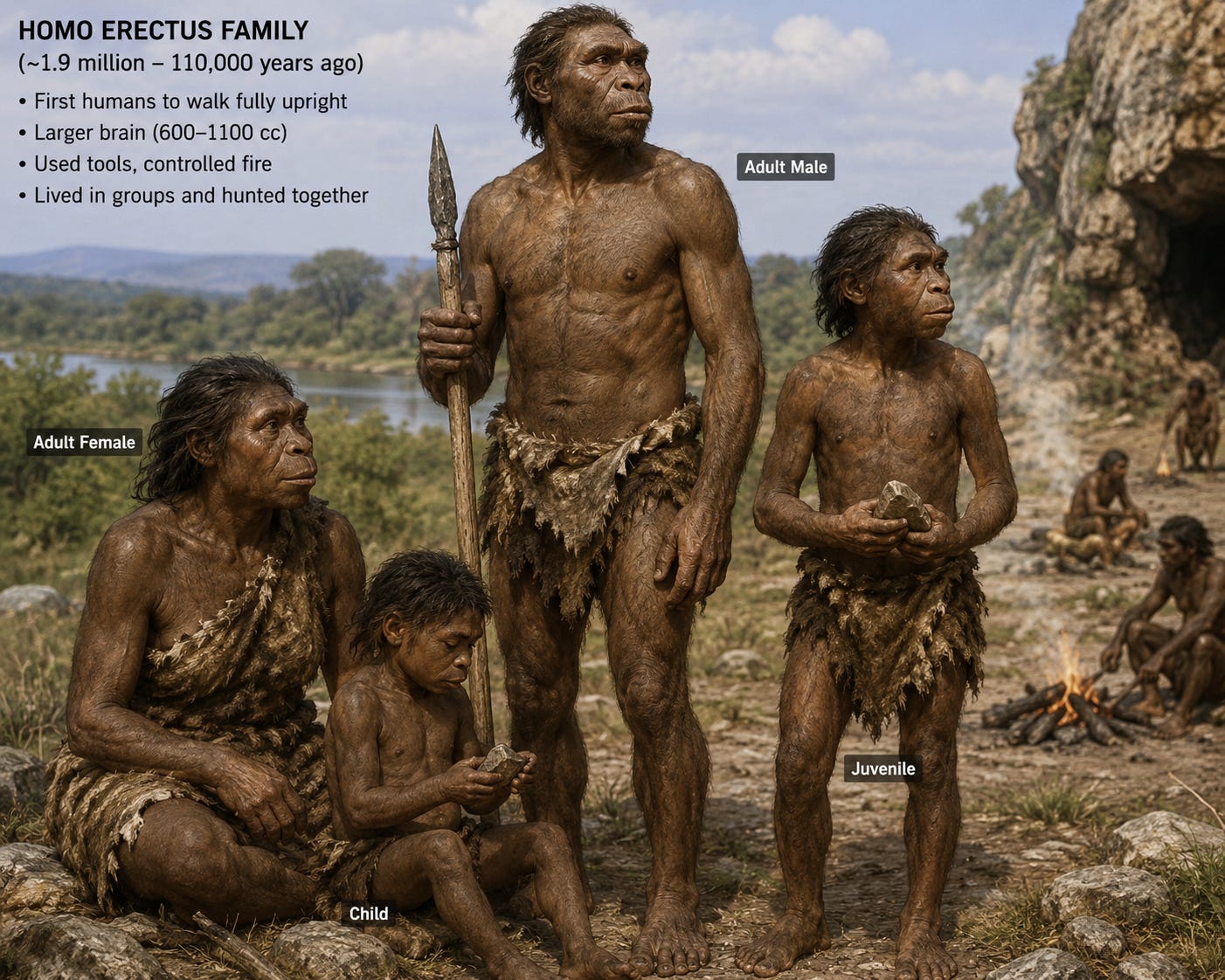
Homo erectus lived long before us and was one of the most successful ancient human species.
They were among the early humans who travelled far from Africa into other parts of the world. One of their greatest achievements was the use of fire.
Fire changed everything.
It gave warmth.
It protected them from wild animals.
It helped them cook food.
It brought people together at night.
Just imagine a group of early humans sitting around a fire, sharing food and sounds, slowly building the beginning of human community life.
❓Why did Homo erectus disappear?
Homo erectus survived for a very long time, but eventually their groups became smaller and isolated. Changes in climate, food sources, and environment may have made survival difficult.
They disappeared slowly, not suddenly. Their extinction reminds us that even a successful species can vanish when the world changes too much.
🏔️ Denisovans: The Mysterious Mountain Survivors
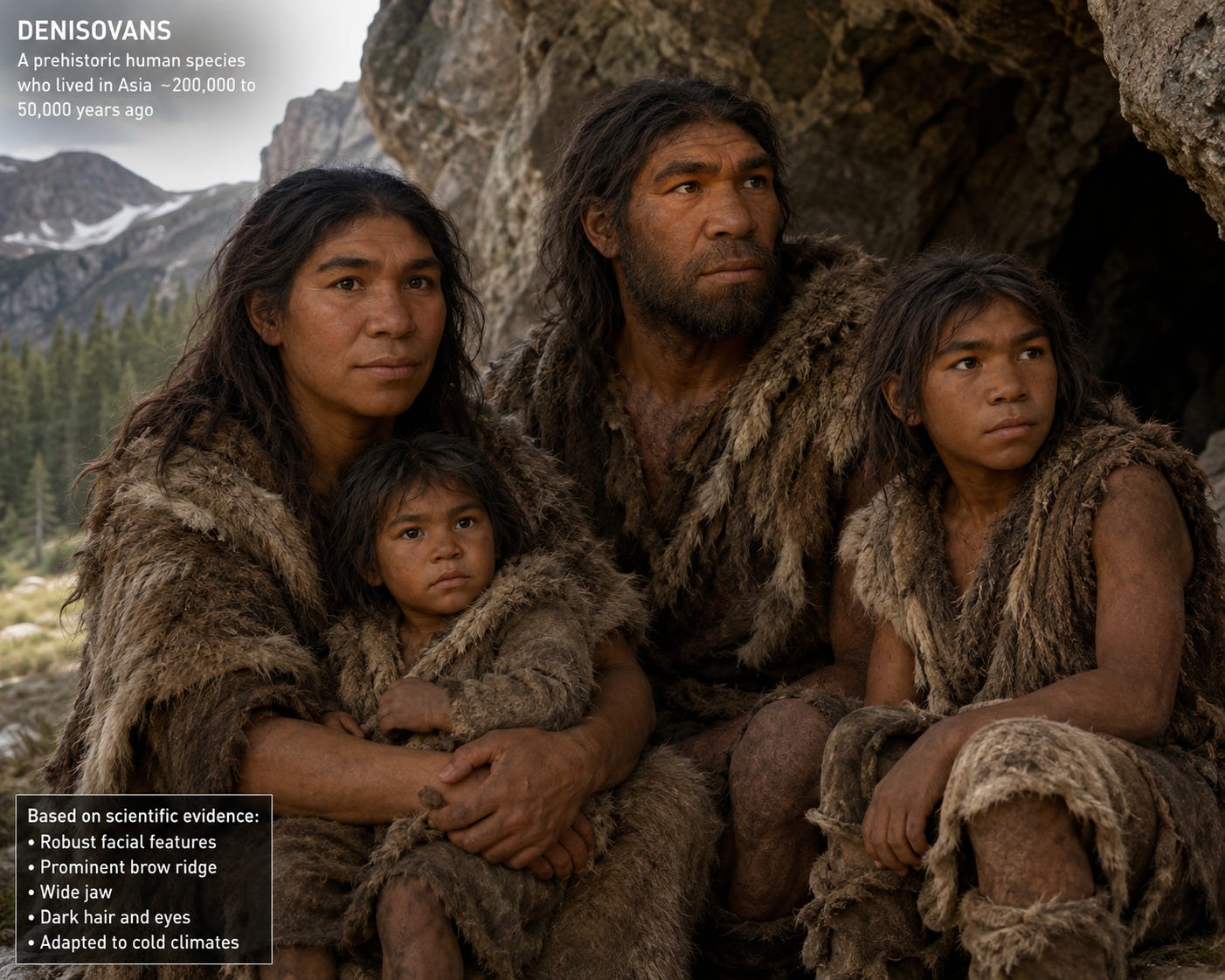
Denisovans are one of the most mysterious ancient human groups.
Scientists do not have many fossils of them. Much of what we know comes from DNA. They lived in parts of Asia and may have survived in difficult environments.
One amazing thing about Denisovans is that some of their genes helped people survive in high-altitude places. For example, some people living in the Tibetan region have inherited genes that help the body use oxygen better in mountain areas.
❓Why did Denisovans become extinct?
We do not know the exact reason. They may have disappeared because of climate change, small population size, competition, and mixing with other human groups.
Like Neanderthals, Denisovans also did not disappear completely. Some modern people, especially in parts of Asia and Oceania, still carry Denisovan DNA.
So, their story continues in human genes. 🧬
🧍 Homo floresiensis: The Tiny Island Humans
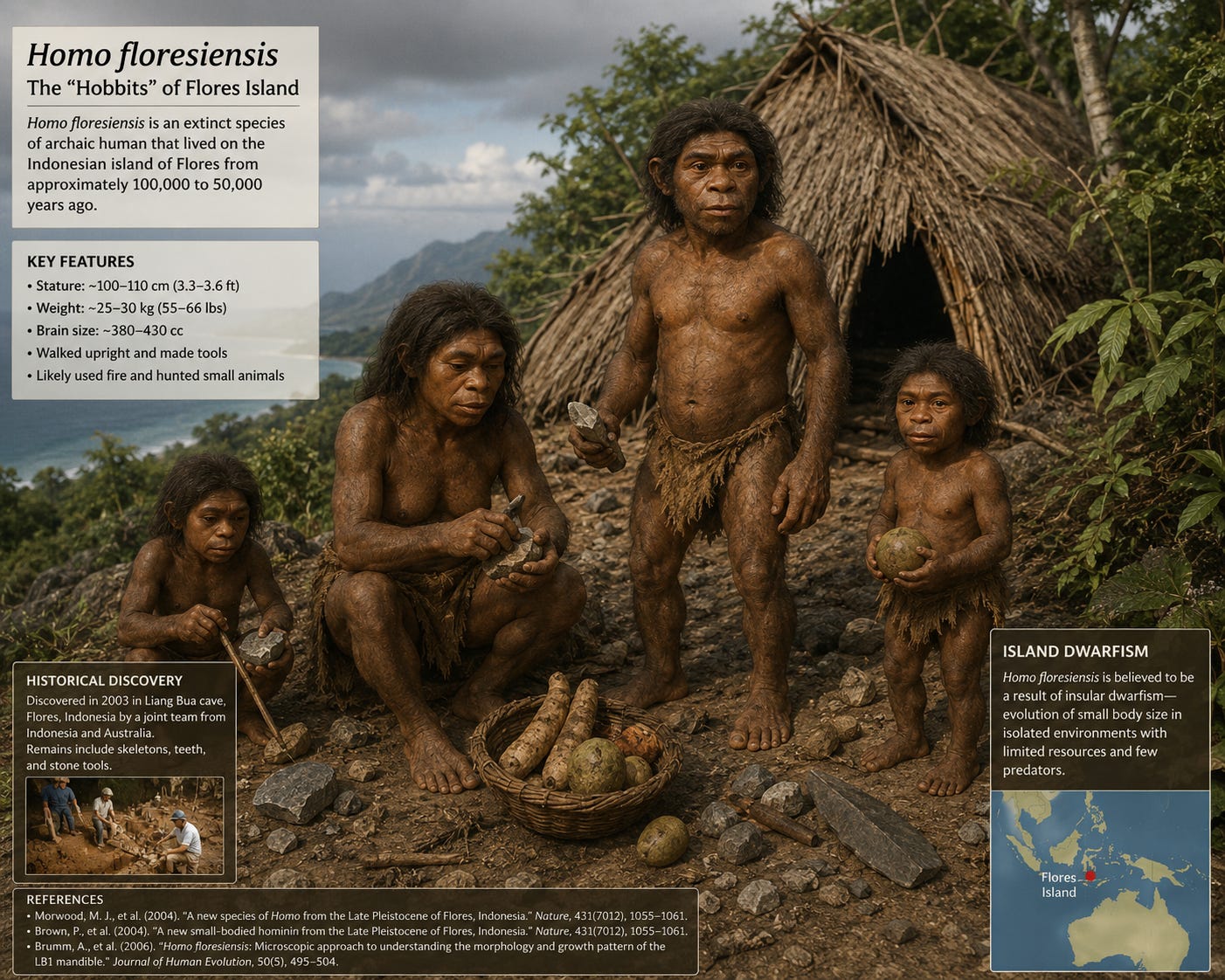
Another interesting ancient human species was Homo floresiensis. They lived on the island of Flores in Indonesia.
They were very small in size, so some people call them “hobbit humans.” But they were not weak or useless. They made tools and survived on an island filled with challenges.
Their discovery surprised scientists because it showed that human evolution was more diverse than we once believed.
❓Why did Homo floresiensis disappear?
They may have become extinct because they lived on a small island with limited resources. Island populations are often fragile. Climate changes, food shortages, volcanic activity, or contact with modern humans may have affected them.
Their story teaches us that small, isolated groups are more at risk when the environment changes.
🌍 Homo sapiens: The Last Humans Standing
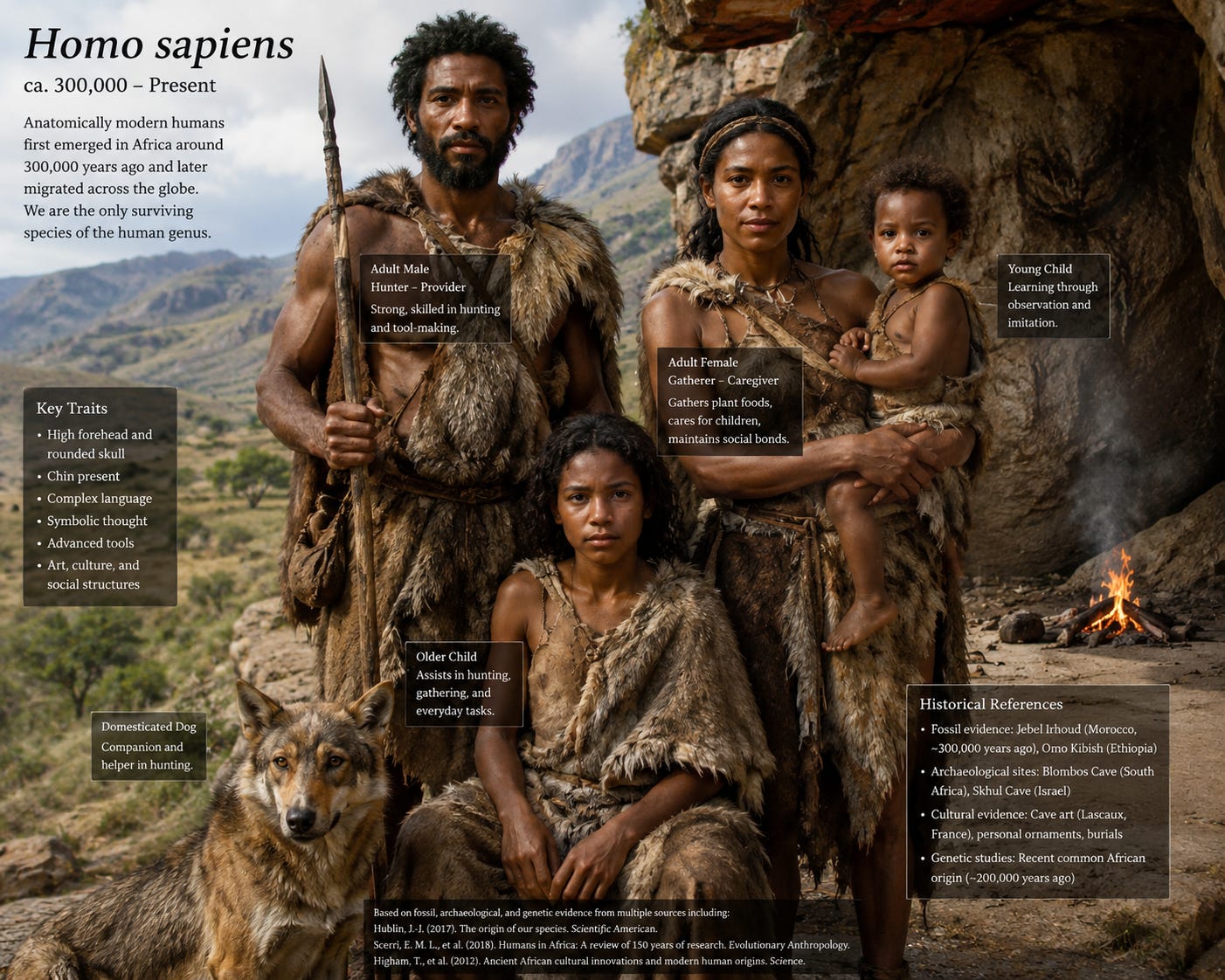
Now we come to ourselves — Homo sapiens.
We are the only human species alive today. Our species first appeared in Africa around 300,000 years ago and slowly spread across the world.
But here is the big question:
Were we the strongest?
No.
Neanderthals were physically stronger.
Were we the first to use tools?
No.
Other humans made tools before us.
Were we the first to use fire?
No.
Fire was used before modern humans became dominant.
Then why did Homo sapiens survive?
The answer may be our special combination of intelligence, cooperation, imagination, language, and adaptability.
Homo sapiens could form larger social groups. They shared knowledge. They created art, symbols, tools, stories, and traditions. They moved into new environments and learned how to survive in different places.
In short, we survived not because we were the strongest, but because we were highly adaptable.
🧍♂️ Homo habilis: The Handy Human
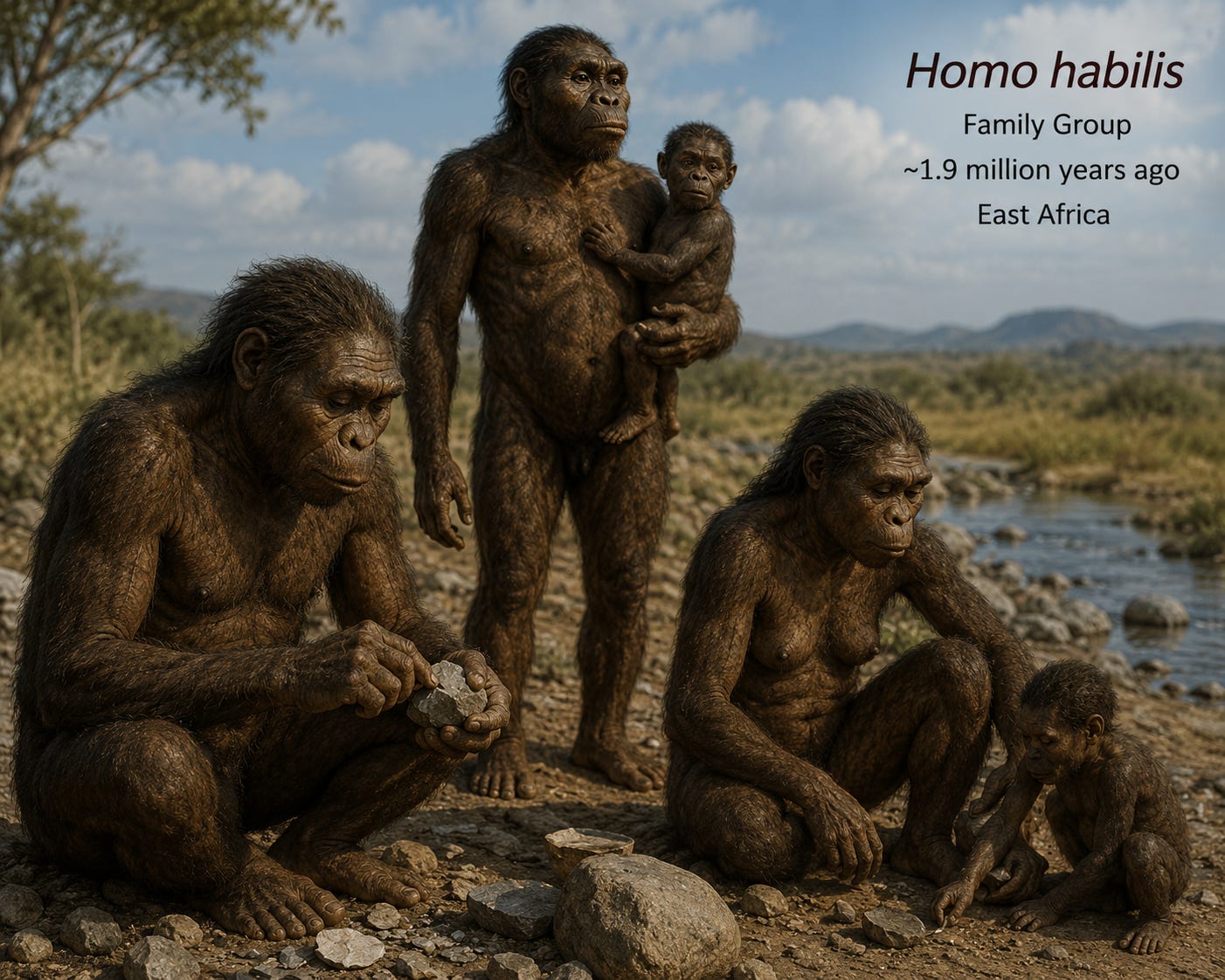
Homo habilis is one of the earliest known members of the human genus.
The name means “handy man.” This species is often connected with early stone tools. These tools helped them cut meat, break bones, and survive in difficult environments.
Homo habilis may not have looked exactly like modern humans, but they show an important stage in human evolution — the growing connection between the hand, the brain, and tool-making.
❓Why did Homo habilis disappear?
Homo habilis may have disappeared because later human species became better adapted. As environments changed and more advanced humans appeared, Homo habilis may have slowly died out or evolved into later species.
Their importance is clear: they show the early beginning of human tool use. 🪨
🧠 Homo rudolfensis: The Early Human Mystery
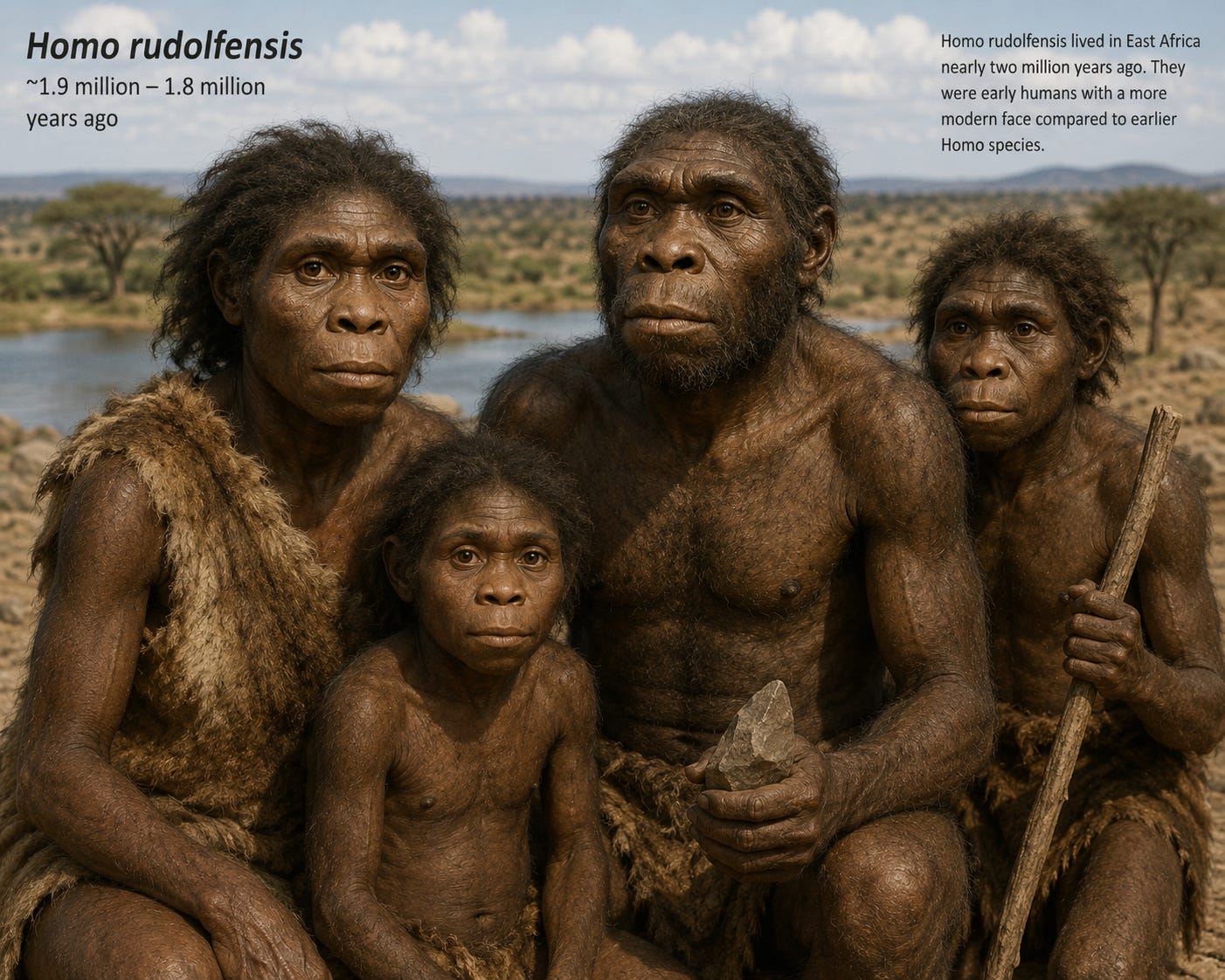
Homo rudolfensis is another early human species.
It is often discussed along with Homo habilis. Scientists still debate exactly where it fits in the human family tree. It had a larger face and braincase compared to Homo habilis.
This species reminds us that human evolution is not simple. Sometimes fossils do not give easy answers. They raise new questions.
❓Why did Homo rudolfensis disappear?
Like many early humans, Homo rudolfensis may have disappeared because of environmental change, competition, or because later human species were better adapted.
Its story is still partly a mystery. 🔍
🦴 Homo ergaster: The African Traveller
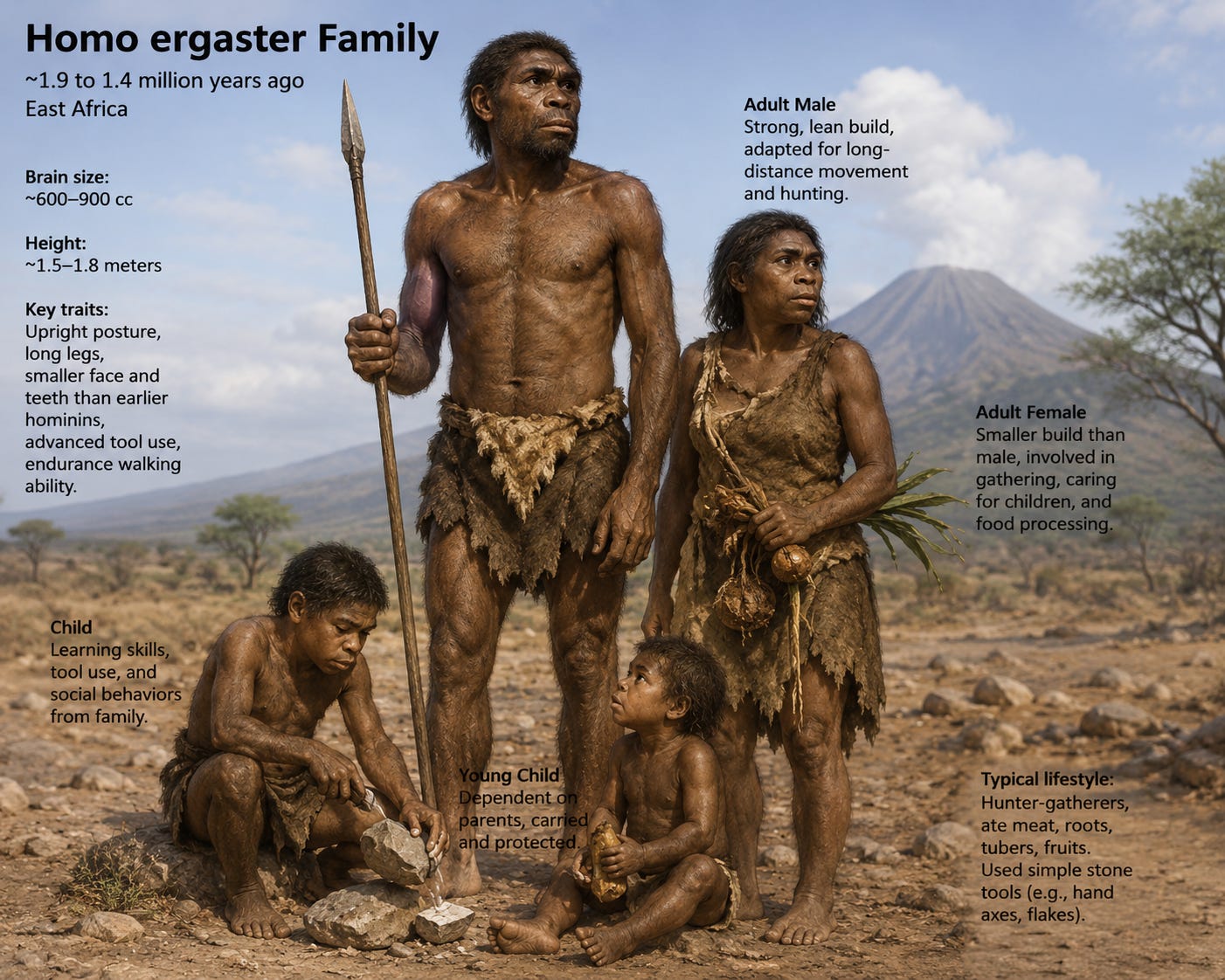
Homo ergaster is often considered an African form or close relative of Homo erectus.
This species had a more human-like body shape, with longer legs and better walking ability. That would have helped them travel longer distances across open landscapes.
Homo ergaster is important because it shows how early humans were becoming better walkers, travellers, and hunters.
❓Why did Homo ergaster disappear?
Some scientists think Homo ergaster may not have fully “disappeared” separately, but may have been closely connected to Homo erectus. Its populations may have changed over time and given rise to later human forms.
This species shows the beginning of humans becoming long-distance explorers. 🚶♂️
🪵 Homo heidelbergensis: The Big-Game Hunters
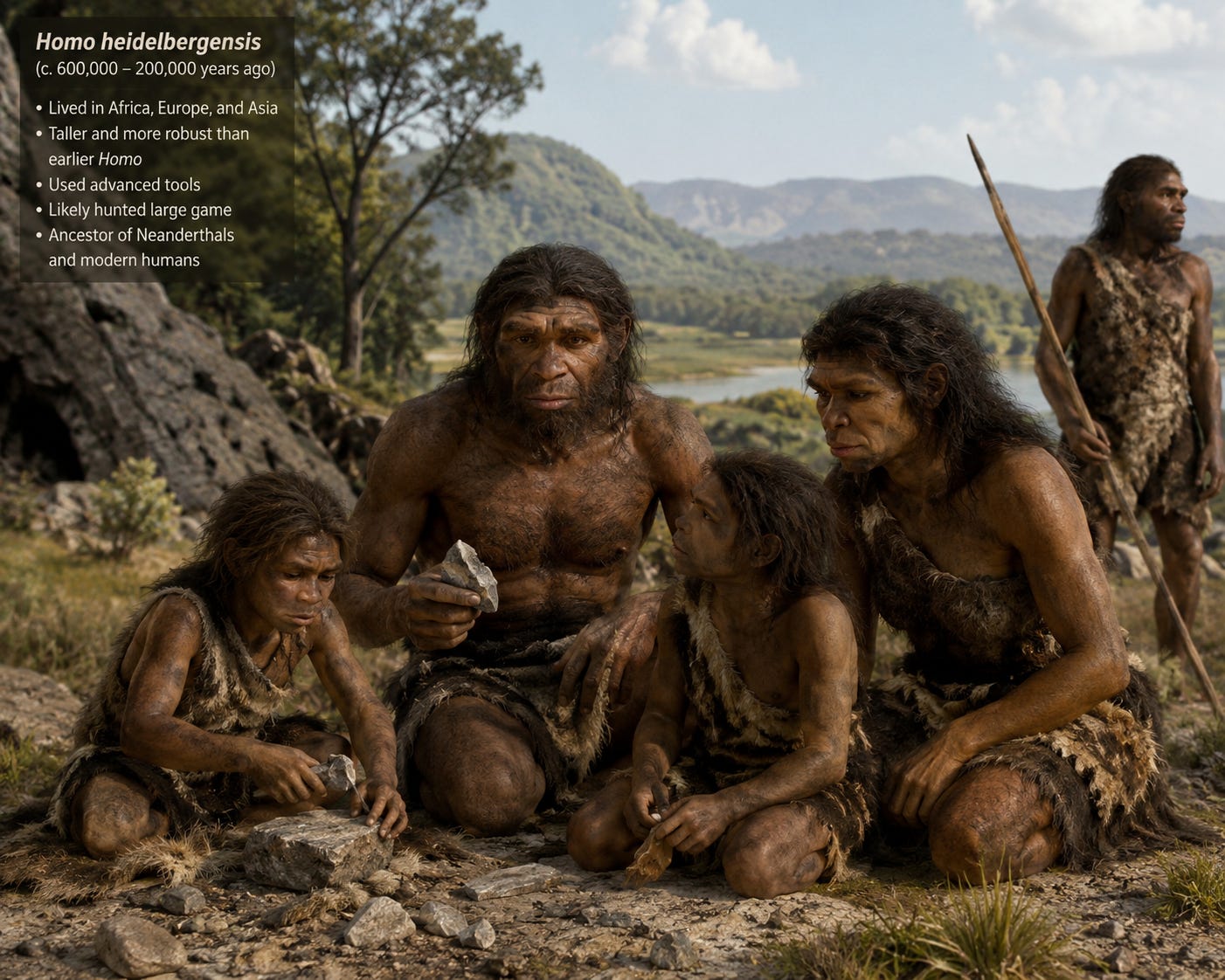
Homo heidelbergensis was a strong ancient human species.
They lived in Africa, Europe, and possibly parts of Asia. They had larger brains than earlier humans and were skilled hunters. They may have used wooden spears and hunted large animals.
Many scientists consider them important because they may be connected to the ancestry of Neanderthals, Denisovans, and Homo sapiens.
❓Why did Homo heidelbergensis disappear?
Homo heidelbergensis may not have vanished in one simple way. Different populations may have evolved into different later human groups.
Some may have led toward Neanderthals.
Some may have been connected to Denisovans.
Some may have contributed to the line that led to Homo sapiens.
So their story may be more about transformation than total extinction. 🌳
🏞️ Homo antecessor: The Early European Human
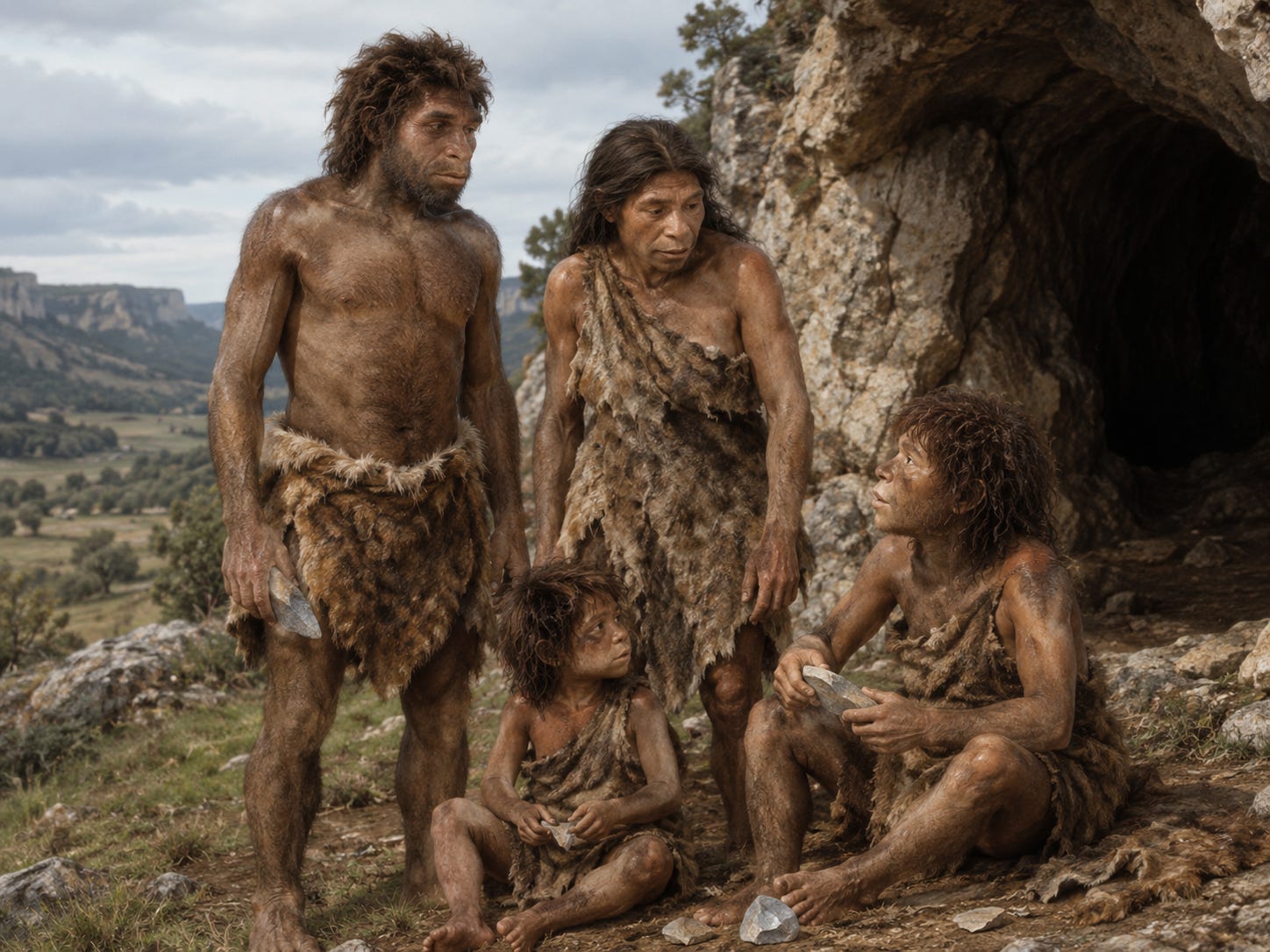
Homo antecessor is an ancient human species found in Europe.
This species is important because it gives clues about early human presence in Europe. Scientists still debate its exact relationship to later humans.
Homo antecessor shows us that human migration into Europe happened in ancient and complex ways.
❓Why did Homo antecessor disappear?
Homo antecessor may have disappeared because of climate changes, small populations, or replacement by later human groups.
Its fossils remind us that Europe had ancient human stories long before modern humans arrived. 🏞️
🕯️ Homo naledi: The Mystery Human from South Africa
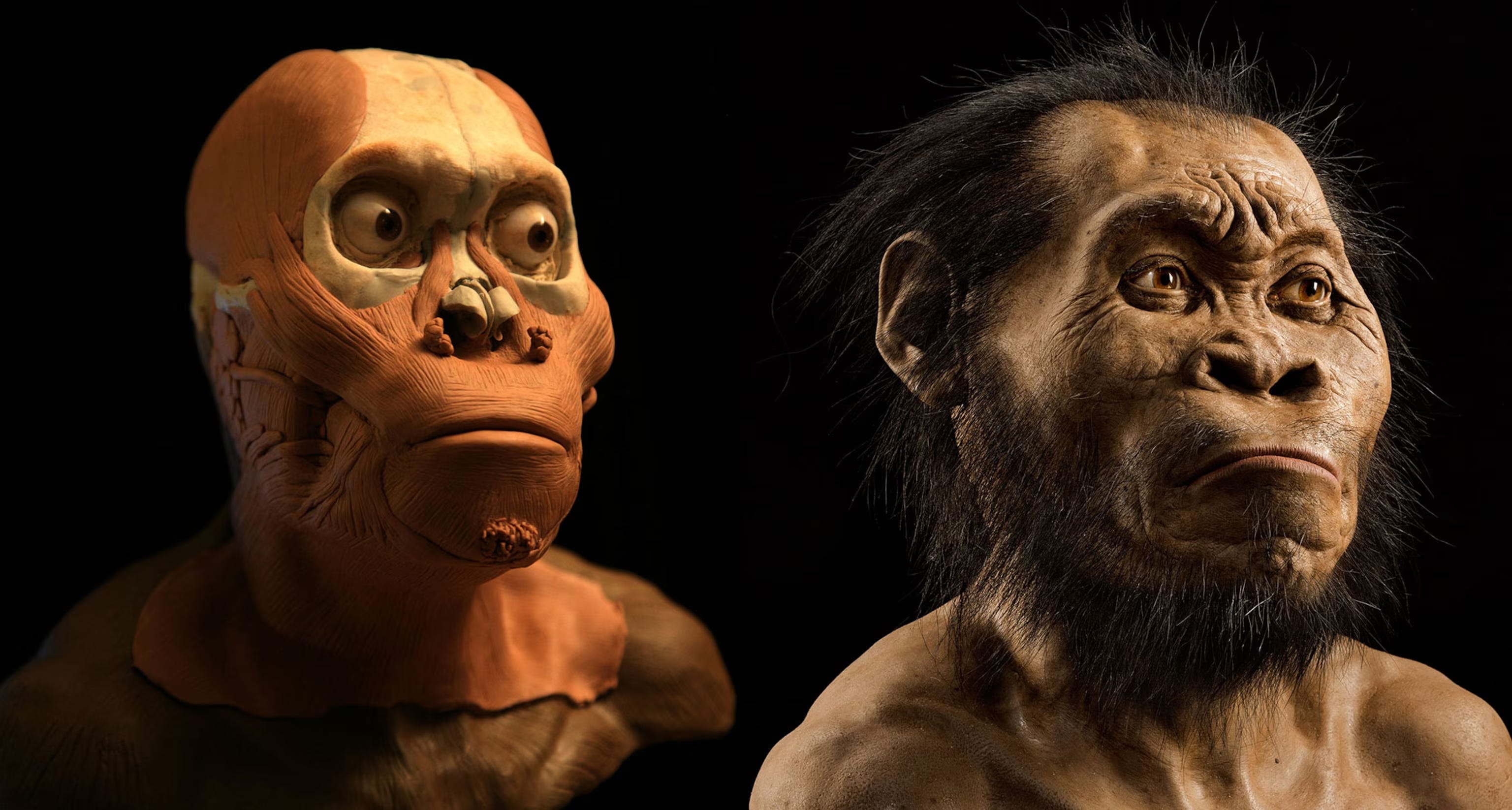
Homo naledi is one of the most surprising discoveries in recent human evolution studies.
Their fossils were found in South Africa. What makes them fascinating is that they had a small brain, but some features of their body looked more human-like.
Scientists continue to study whether Homo naledi had complex behaviours. Their discovery reminds us that brain size alone does not tell the full story of intelligence or behaviour.
❓Why did Homo naledi disappear?
We do not know exactly why Homo naledi became extinct. Their small population, environmental pressures, and competition with other human groups may have played a role.
Their story remains one of the great mysteries of human evolution. 🕯️
🏝️ Homo luzonensis: The Island Human from the Philippines
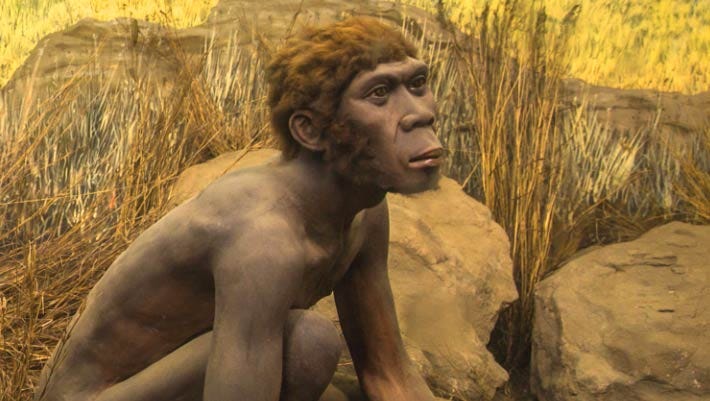
Homo luzonensis was discovered on Luzon island in the Philippines.
Like Homo floresiensis, this species shows that ancient humans reached islands and developed in unexpected ways. Some of their body features were unusual, showing a mix of primitive and more human-like traits.
This discovery tells us that Southeast Asia was full of surprising human diversity.
❓Why did Homo luzonensis disappear?
We do not know the exact reason. They may have disappeared because of island isolation, environmental change, small population size, or contact with later human groups.
Their story proves that many hidden chapters of human history may still be waiting to be discovered. 🧭
🐉 Homo longi: The “Dragon Man”
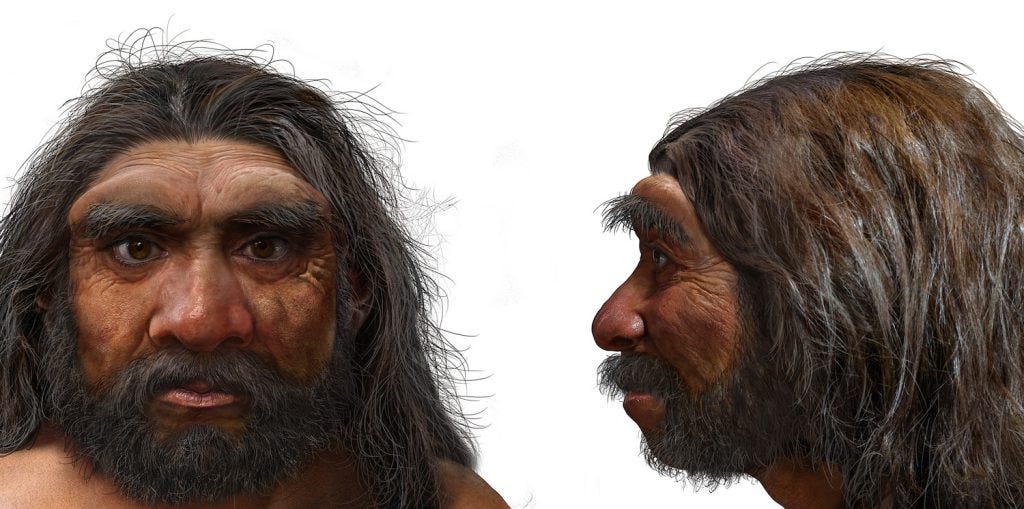
Homo longi is sometimes called “Dragon Man.”
This species name is linked to a large ancient skull found in China. Some scientists believe it may be closely related to Denisovans, while others are still debating its exact place in the human family tree.
Because the science is still developing, Homo longi should be described carefully. It may represent an important branch of ancient humans in Asia.
❓Why did Homo longi disappear?
Since its classification is still debated, we cannot say clearly why Homo longi disappeared. It may have been absorbed into other human populations, replaced by later groups, or connected to Denisovan-like humans.
This species shows that Asia may hold many missing pieces of the human evolution puzzle. 🐉
❓ Homo juluensis: A Newly Proposed Human Species
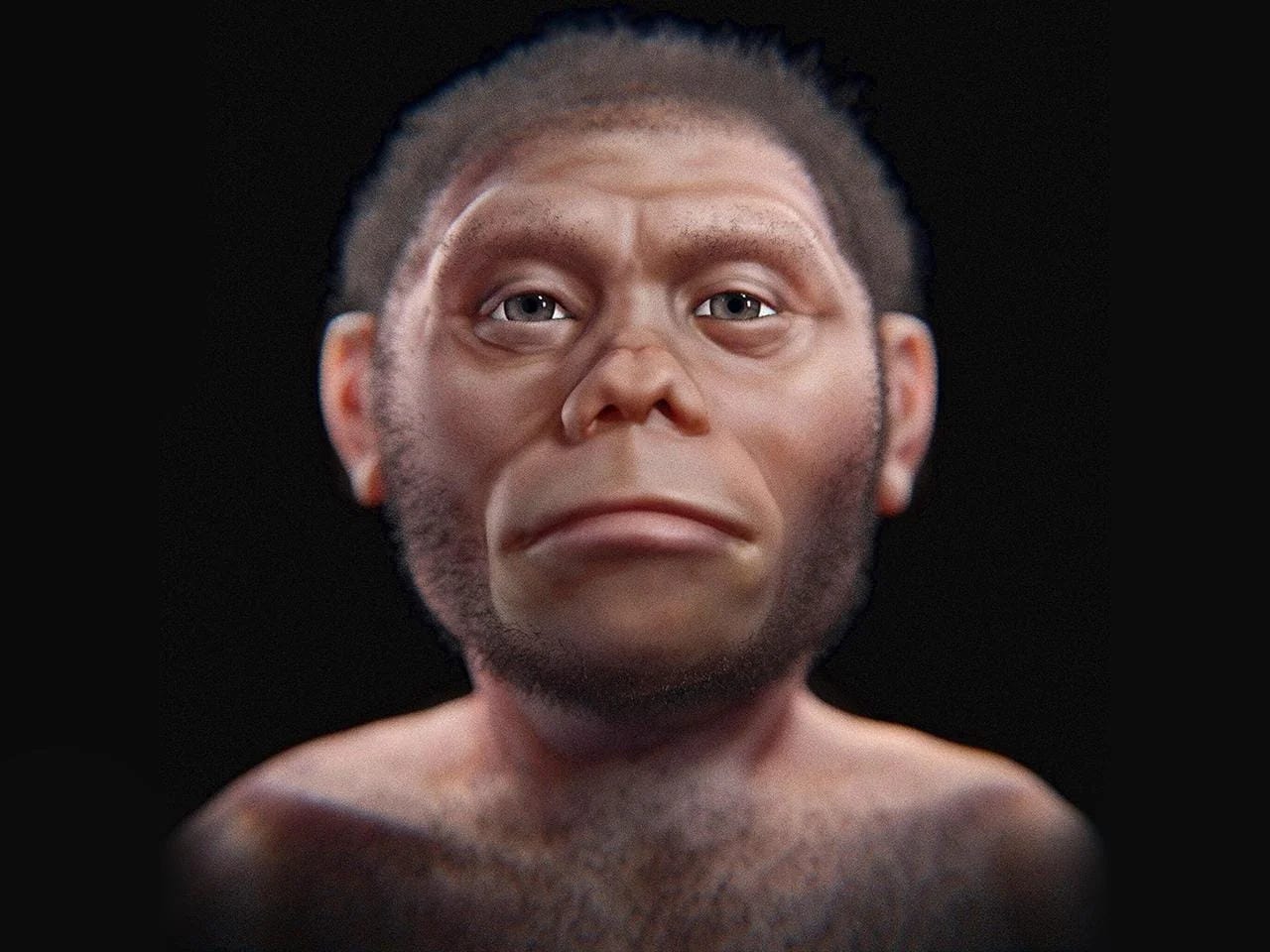
Homo juluensis is a proposed species name linked to ancient humans from eastern Asia.
This is still new and debated, so it should not be presented as fully settled science. But it is interesting because it shows that researchers are still discovering and rethinking ancient human diversity.
❓Why did Homo juluensis disappear?
Because this species is still debated, we cannot give a definite answer. If accepted by science, its disappearance may have involved climate change, small population size, competition, or mixing with other human groups.
It reminds us that the human family tree is still being updated. 🌳
🌱 Even Earlier Human Relatives
Before the genus Homo became dominant, there were even earlier human relatives. They were not exactly humans like us, but they are very important in our evolutionary story.
🦶 Australopithecus afarensis
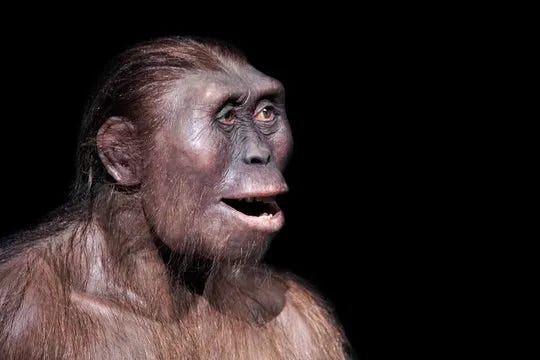
This species is famous because of “Lucy,” one of the most famous ancient fossils ever found.
Australopithecus afarensis walked on two legs, though they still had some ape-like features. They show an early stage in the journey toward humans.
🦴 Australopithecus africanus
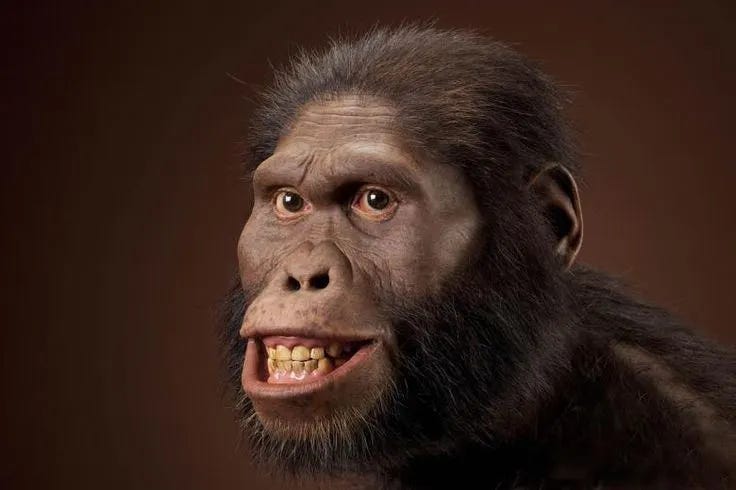
This was another early two-legged human relative from Africa.
They had both human-like and ape-like features. Their fossils helped scientists understand how early human relatives developed over time.
💪 Paranthropus boisei
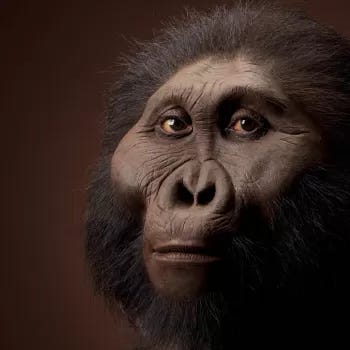
Paranthropus boisei had large jaws and teeth. They were likely adapted for heavy chewing.
They show that not every ancient human relative followed the same path. Some evolved special features for particular diets and environments.
🌿 Ardipithecus ramidus
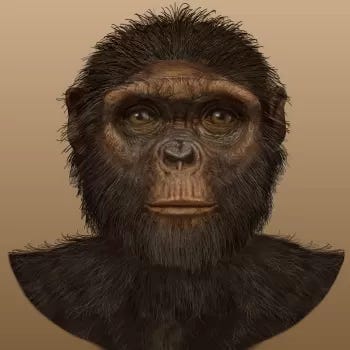
Ardipithecus ramidus was a very early human relative.
It helps scientists understand the early transition from ape-like ancestors to later two-legged hominins.
These early relatives remind us that the human story began long before Homo sapiens appeared.
⚠️ Why Did So Many Human Species Become Extinct?
Ancient human species did not disappear for one simple reason. Extinction usually happens because of many problems coming together.
🌦️ Climate Change
The Earth’s climate kept changing. Forests, grasslands, animals, rainfall, and food sources changed too. Some human species could not adjust quickly enough.
🍖 Competition for Food
When Homo sapiens spread into new areas, they may have competed with other human species for food, shelter, hunting grounds, and resources.
👥 Small Populations
Some ancient humans lived in small groups. Small populations are more vulnerable to disease, hunger, inbreeding, and sudden disasters.
🧬 Interbreeding
Some species did not simply die out. They mixed with Homo sapiens. That is why Neanderthal and Denisovan DNA still exists in some modern humans.
🏝️ Isolation
Species living in isolated places, like islands, had fewer options when danger came. If food became scarce or climate changed, they had nowhere else to go.
🌋 Natural Disasters
Volcanoes, droughts, floods, and sudden environmental changes may also have affected small ancient human groups.
🧬 The Ancient Humans Are Still Within Us
One of the most beautiful parts of this story is that extinct humans are not completely gone.
Neanderthals and Denisovans left behind more than bones and tools. They left behind DNA. Small parts of them still exist in many people today.
So when we talk about ancient humans, we are not talking about total strangers. We are talking about distant relatives.
Their story is also our story.
💡 What This Teaches Us
The history of human species teaches us many lessons.
Neanderthals teach us about strength.
Homo erectus teaches us about discovery and fire.
Denisovans teach us about survival in extreme places.
Homo habilis teaches us about early tool use.
Homo heidelbergensis teaches us about hunting and adaptation.
Homo naledi teaches us that mystery still remains.
Homo floresiensis and Homo luzonensis teach us that island humans had surprising stories.
Homo sapiens teach us about adaptability, imagination, and cooperation.
The strongest did not always survive.
The biggest did not always survive.
The smartest alone did not always survive.
The species that adapted best survived.
🌟 Final Thought
We are the last surviving human species, but we are not the whole human story.
Before us, there were others.
They walked, hunted, struggled, learned, travelled, adapted, and survived.
Some disappeared.
Some changed into later humans.
Some became part of us.
So the next time we think about humanity, let us remember this:
We are not just modern humans. We are the living result of a long, ancient, and extraordinary journey.
Think Stack 101 Team 🧠
Drop a comment or reply to this newsletter – we’d love to hear your perspectives!
Think Stack 101 — Your Daily Stack of Knowledge, Wisdom, Ideas 🧠

Cut through the noise!
Follow Think Stack 101 on WhatsApp and Instagram for your daily stack of knowledge, wisdom, ideas, and innovation to power up your thinking. 🚀🧠✨
✨ One smart thought a day. Just the boost your mind needs.